

Today, while trying to think of something to write about, a story I read on Facebook years ago suddenly came to mind. The story was originally posted on Reddit and was translated by Reddit Vietnam. I shared it to my timeline back then, but now I’ve searched everywhere and just can’t find it. The only thing I still remember is the Vietnamese title: Sẹo Sâu - Deep Scar. So, I’ve decided to rewrite the story from memory, adding a bit of my own imagination to fill in the parts I can no longer recall.
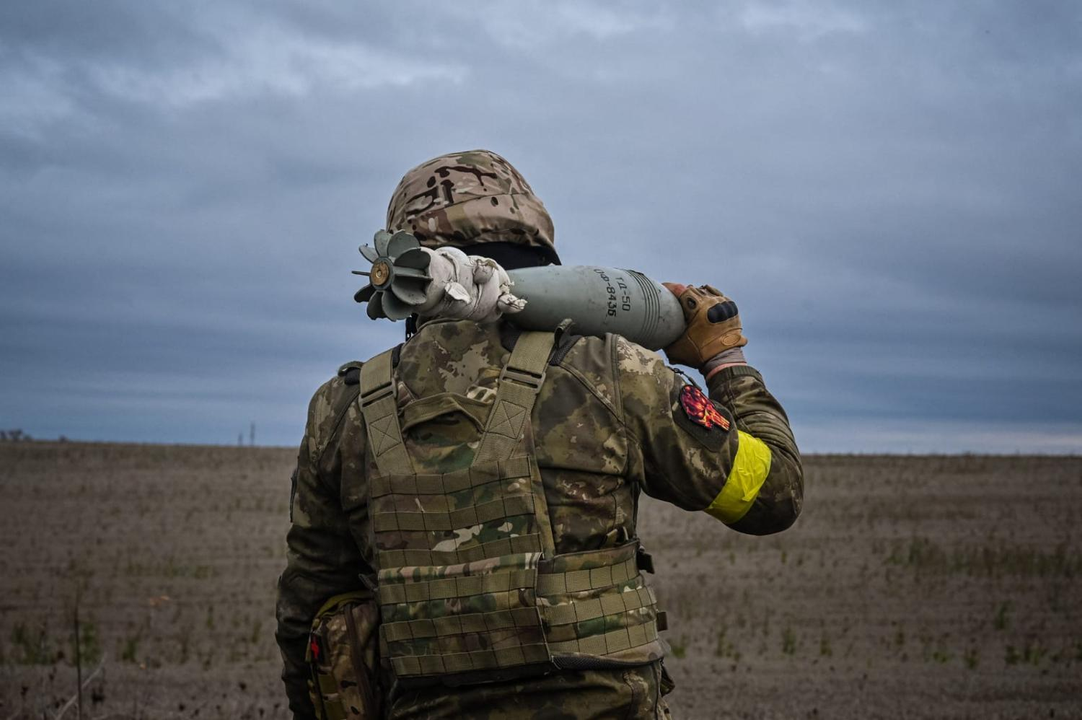
Credit: Sergey Bobok/AFP via Getty Images
In this world, lying left a mark. Literally.
Each time a person told a lie, a scar would appear somewhere on their body. A harmless white lie might leave behind only the faintest scratch, no more visible than a paper cut, while deeper, more calculated lies carved wounds that were impossible to ignore. Over time, dishonesty became visible, worn on the skin like a confession. The most deceitful among us bore grotesque marks. They were feared. Shunned. Whispers always followed them.
I was a war correspondent stationed in Zone X, a stretch of scorched earth locked in a seemingly endless conflict. By the time I arrived, the war had reached a boiling point. Death became a daily presence. Civilians, soldiers, even children caught in the relentless crossfire. By day, sunlight was replaced with smoke, and the air was filled with the snap of gunfire, the bark of orders, and the keening wails of the wounded and the dying. By night, the silence rang louder than the chaos. You could hear the electric hum of drones circling above, the crack of distant rifles, and the soft, terrified prayers murmured into torn blankets. The stars had vanished. All that remained was the dull orange glow of fires on the horizon, flickering like a dying heartbeat. I had joined with a small unit to document the reality on the ground. My role was to observe, report, and most importantly, survive.
Among the soldiers was a man who stood out not by rank or orders, but by presence. While others grew hard and distant, he remained gentle. In a world that had turned cold and brutal, his kindness glowed quietly, steady like a candle in the dark. He had the build of a fortress, tall and broad and solid, yet he moved with surprising grace that made you forget the weight he carried. I watched him help the medic lifting wounded men onto stretchers, share his rations with the youngest recruits, and even make a dying boy laugh with a joke about a general and a grenade. You’d think he was one of the most decent men on Earth.
Yet, the others in the unit kept their distance.
They treated him with respect, but nothing more. They spoke only when necessary, with short, formal words but they never mentioned anything personal. During casualty exchanges at mealtime, no one met his eyes for long. When they passed him, their bodies tightened, as if brushing against something ghostly. I didn’t understand it. I had seen no scars on him, at least not on the parts of his body that were usually visible. His arms were clear. His calloused hands, though hardened by labor, bore no marks of deceit. My curiosity grew with each passing day, but I never asked.
Then one afternoon, while we were setting up a temporary shelter near the ruins of an old school, an emergency sent everyone scrambling. An explosion had gone off nearby, and we all ran. Amid the chaos, he peeled off his jacket and shirt to stop a young soldier’s bleeding leg with a makeshift tourniquet.
And that’s when I saw it.
A single, horrifying scar stretched across his back like a ravine. Jagged, raised, almost black at the edges, as if burned into his flesh by something far worse than fire. It wasn’t just a scar. It was a wound that had been carved deep by guilt and time, like some terrible lie has been told over and over again. I had seen many injuries in this war, but none that unsettled me the way that one did. It shocked me. That night, I lay awake, staring into the darkness. My mind wouldn’t let go of the image. How could someone so full of compassion bear a scar like that? What kind of lie could cut that deep?
A few days later, the answer came in the most unexpected way.
We were stationed in a village when the first sounds came. At first, it was distant, like cracks of thunder. Then the sky ripped open with gunshots, screams, shouts, and the rumble of buildings collapsing. The enemy had launched a sudden, brutal assault. Our camp dissolved into panic. Many grabbed their weapons, some reached for radios, yelling into the static for updates or reinforcements. The camp turned frantic, a blur of motion and noise. I grabbed my camera, slung it around my neck with trembling fingers, and followed the unit into the chaos with my heart pounding in my chest like a drumbeat.
The fight raged on for what felt like an hour, maybe more. I was too absorbed in capturing it all, recording, snapping photo after photo of the horror unfolding around me, that I didn’t even notice how far I’d drifted. By the time I looked up, my unit was gone. Stumbling through the broken landscape, I searched for familiar faces, trying to make sense of the carnage. Shapes darted in and out of the haze, some human, some not. I didn’t know who to trust. I realized had lost sight of most of the squad and panic was starting to claw at the back of my throat. Just when I felt it tighten too far, I saw him.
Through the settling dust, his silhouette emerged. He was kneeling in the dirt, hunched over something small. As I got closer, I saw what it was: a little girl, no more than six or seven, limp in his arms. Her legs dangled, and blood bloomed against her dress like red ink spilled on paper. He held her like she was made of glass. His hand trembled on her back, his forehead pressed gently to hers, rocking her in desperate prayers. To her. And to himself.
“It’s okay,” he whispered, over and over again. “You’re going to be okay.”
*The words are mine, but the idea comes from the original author.
At first, I felt that the story was a bit short and the ending too abrupt. I considered adding more details, like the soldier’s past or a deeper dive into the narrator’s inner thoughts, since I felt my writing was still a bit shallow. But after thinking it through, I decided to leave it as it is, partly out of respect for the original author, and partly because with a war setting, an open ending like this actually makes sense. The child might survive, or the soldier might get his scar infected and die. The ending is up to the reader. Personally, whenever I read books or watch films about war, I always assume that every character will die. It’s just my way of preparing myself emotionally.
As someone who’s always loved history, I’ve consumed more than my fair share of films, books, and articles about wars and the bloodiest chapters of humanity. I thought I’d grown numb to the horrors through those black-and-white photos, grainy footage, and the stories told by survivors. But somehow, this short story hit differently.
A “good man” in war is not heroic in the traditional sense like Superman. He does not save the day or return home to applause. Instead, he is haunted. The soldier’s act of mercy, which is comforting a dying child with a lie to ease her passing in the middle of a fight, was not a grand or noble gesture, but it was quiet and deeply human. This is especially powerful in a time when people are becoming increasingly desensitized to suffering. Every day, we are bombarded with horrific news: images of destroyed cities, starving civilians, and senseless violence. Most people scroll past them without a second thought. But the soldier, someone who has seen death up close and perhaps caused it, still chose to offer kindness.
However, that small act of kindness came at a cost: it stayed with him, left an ugly mark on his body. But I believe it’s nothing compared to the wound left on his mind. The ugly truths of war aren’t just carved into flesh; they cut deep into the psyche, into the conscience. The soldier's kindness wasn’t celebrated. He was burdened by it. Others avoided him because of the grotesque scar. What made him a “good man” wasn’t any act of bravery, but his refusal to let go of his humanity in an inhuman place.
In the end, no one really wins a war. There are only survivors, carrying wounds the rest of us may never see.

Bài viết nổi bật khác
- Hot nhất
- Mới nhất