

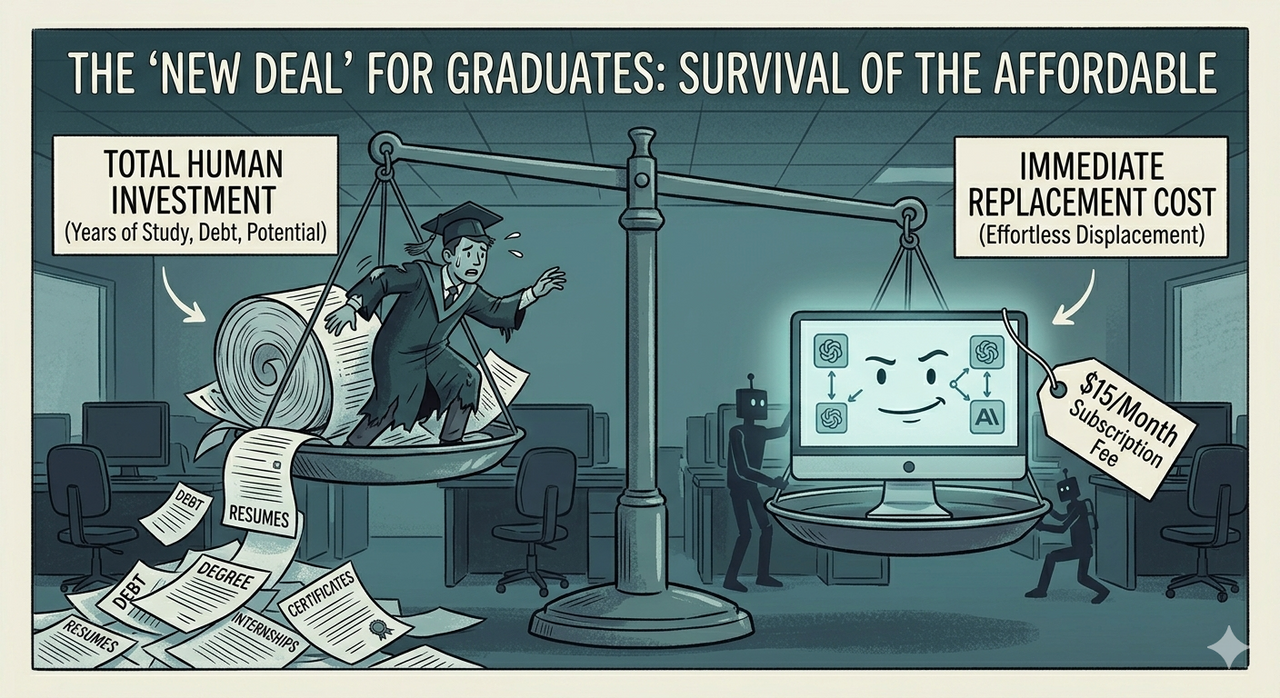
Figure 1: Is the value of a human being greater than a $15 subscription?
(Note. Image generated by Google, Gemini 3 Flash, 2026)
"The labour market in 2026 has evolved beyond a simple race of capabilities. It is now a survival game where individuals must
prove their worth is greater than a $15 subscription fee. Well, it sounds hurt but true. It is an uneven battle, and the odds are heavily stacked against recent university graduates right from the start."
Six months ago, while submitting my IELTS writing drafts to prep for my current journey to New Zealand, my tutor threw a question at me that made me pause: "Did you use AI for this?". I hadn’t, that’s not a big deal, but you know. What I’m thinking is the even educators equipped to “limit” use of AI are worried about it, and paradoxically, they are using AI to detect AI. We are living in a moment where the line between human contribution and machine output is blurring so fast that even educators cannot always tell the difference. In New Zealand, that blurring is now costing people their livelihoods.
New Zealand is not immune. RNZ highlights that among the New Zealand-based employers surveyed, more than half reported that AI was driving significant job displacement and that they were now slowing or stopping entry-level hiring. Stats NZ suggests that the unemployment rate among New Zealand’s 15- to 24-year-olds is around 15% – higher than in recent years and roughly triple that of the wider working-age population. The article also points out that AI is a significant cause of this unemployment rate. AI hasn't necessarily wiped out all jobs, but it is automatically learning repetitive, structured tasks – which are often the primary responsibilities of recent graduates.
So the question now is whether businesses need fresh graduates or just need senior staff and provide them with an AI toolset to save costs. It is now a survival game where individuals must prove their worth is greater than a $15 subscription fee.
Well, it sounds hurt but true. It is an uneven battle, and the odds are heavily stacked against recent university graduates right from the start.
“The youth are trapped in a weird catch-22”
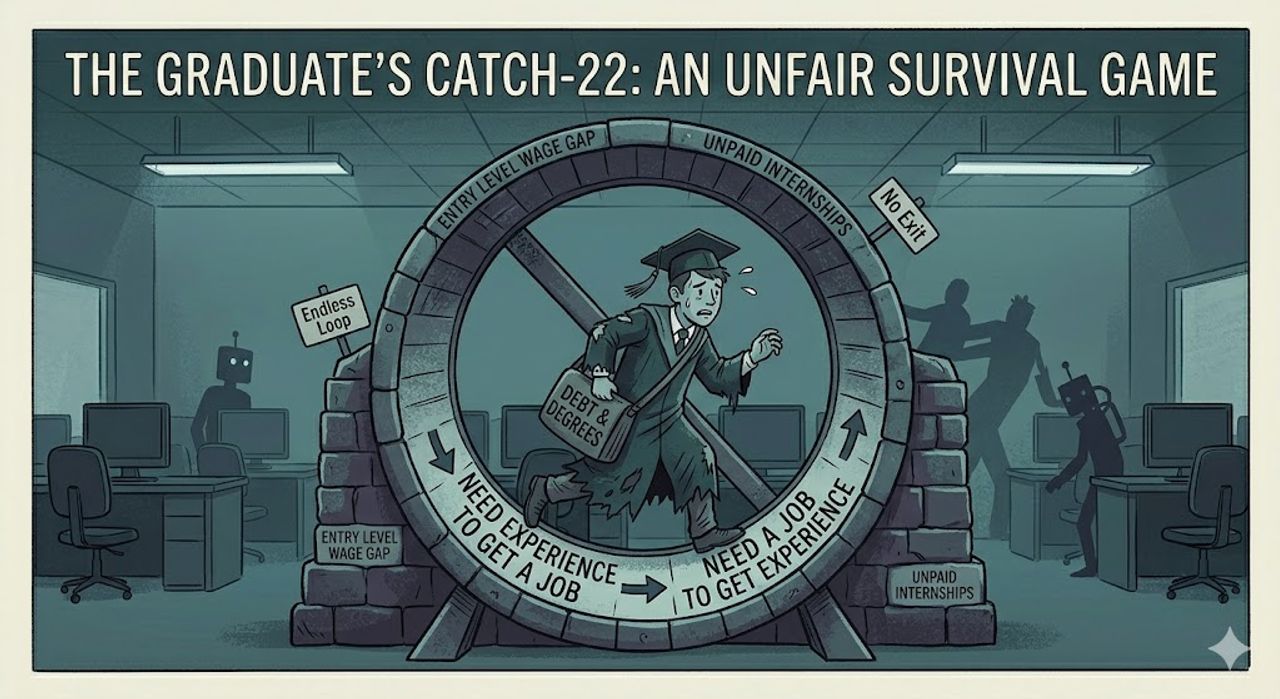
Figure 2: A graduate's catch-22: An unfair survival game
(Note. Image generated by Google, Gemini 3 Flash, 2026)
They are forced to learn AI just to compete with AI. But the sharper their AI skills get, the harsher the reality bites: companies don't need a junior middleman. By using AI to boost their own workflow, they unknowingly shut the door on two of their peers. And the ultimate kicker? Once they finish training the company's AI, their own door slams shut too.
How Current Leadership Has Contributed
Most businesses today are driven purely by revenue and profit. They focus heavily on maximising returns and cutting costs, viewing this as the ultimate model of efficiency. But this drives a major issue: business owners start shifting toward a mindset where they reduce both human labour and AI into dollar signs. When an AI tool can process 500 invoices in the time it takes a human to complete ten, the transactional calculus is straightforward.
It could be illustrated by 8700 knowledgeable bureaucrats are about to be axed by implement AI in governance agencies as RND reported from the disscussion between Roger May (retired forestry consultant of Motueka) and Finance Minister Nicola Willis. The Goverment estimates saving of 2,4 billion NZD, but experts are warning that this is just the tip of the iceberg. The projected savings, which the government pulled out of thin air without any solid backing, represent only the visible part. Hidden beneath the surface is a massive bulk of unseen costs: licensing fees, continuous upgrades, data sovereignty issues, and, more critically, a dangerous reliance on foreign tech giants like Microsoft, OpenAI, and Anthropic for both infrastructure and talent.
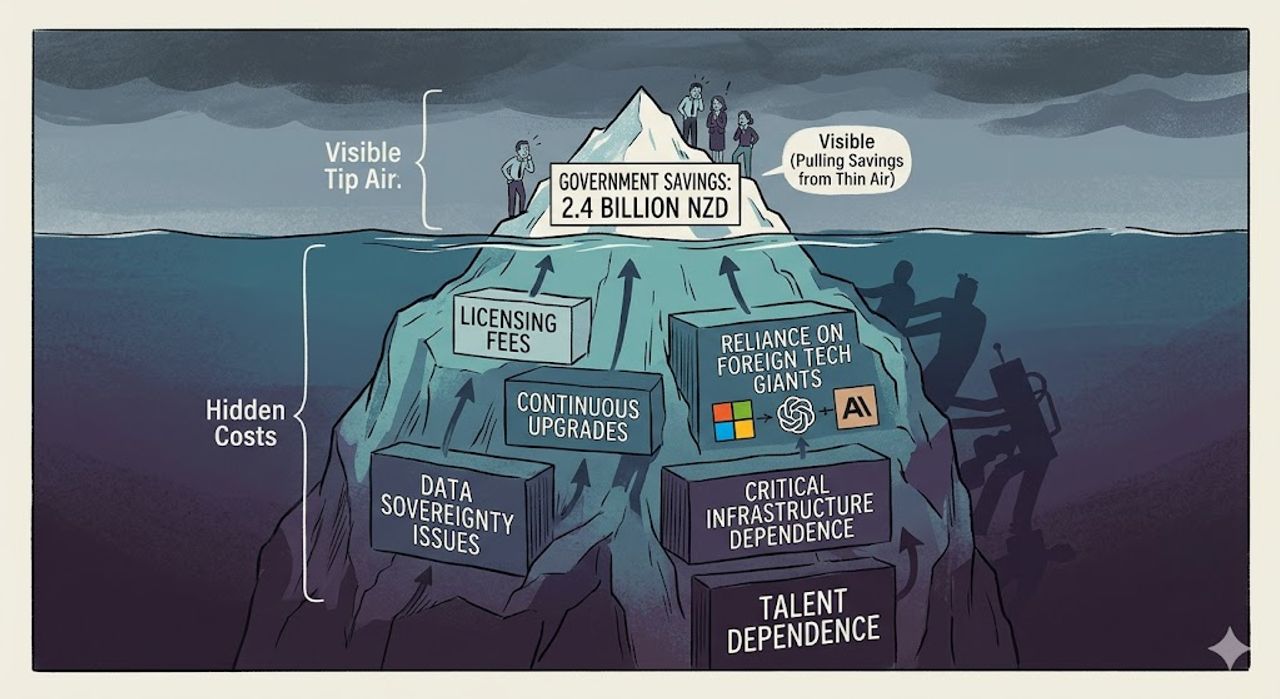
Figure 3: Illustration of hidden costs inspired b
(Note. Image generated by Google, Gemini 3 Flash, 2026)
With this approach, leaders are no longer acting as responsible stewards; instead, they have reduced their roles to mere 'profit calculators',actively stripping away their own leadership responsibilities. As the Map of Meaning framework reminds us, meaningful work is never just about productivity. It encompasses connection, contribution, and a sense of being part of something larger. When leaders automate without strategy, they destroy meaning, not just jobs.
But why is changing it so hard?
The challenge is not lack of good intentions, it is about locked-in way seeing. For many executives, the belief that "efficiency equals progress" is so deeply embedded that questioning it feels like questioning the entire purpose of business. The concept of mental models from Senge (American systems scientist) demonstrate that organisation leaders run the business on the belief that growth is best and technology is progress, which is incredibly difficult for corporate leaders to break free from, as these models serve as the very bedrock of their reputation and power.
In an era of hyper-fast AI development, leaders are increasingly driven by immediate results. This triggers a challenge we might call situational leadership, a crossroad where leaders are forced to adapt and pivot from transactional leadership to transformational leadership. At this point, The question is not just who should lead this change, but whether our current systems will allow such leaders to emerge.
The reaction as a responsible leader
As a Product Owner in the Tech industry, I recently caught myself generating a complete wireframe and user flow in under three minutes, a task that once took hours of manual working. The prompt was simple. The output was good. And the thought that followed was unsettling: if I can do this, what exactly am I being paid to protect?
That moment of discomfort, I now believe, is exactly where responsible leadership begins. Rather than dismissing it, I chose to sit with it — and to ask the harder question: who else on my team is quietly having the same realisation, and do they feel safe enough to say so?
Based on the principles of servant leadership, my response was not to accelerate my own AI proficiency to harm others, but to open the conversation and make this threat visible so we can face it together.
As Senge warns, the danger is never the event itself; it is the silence around it. If I want others to respond with honesty rather than anxiety, the first move belongs to the leader in the room, and sometimes, that person is me.
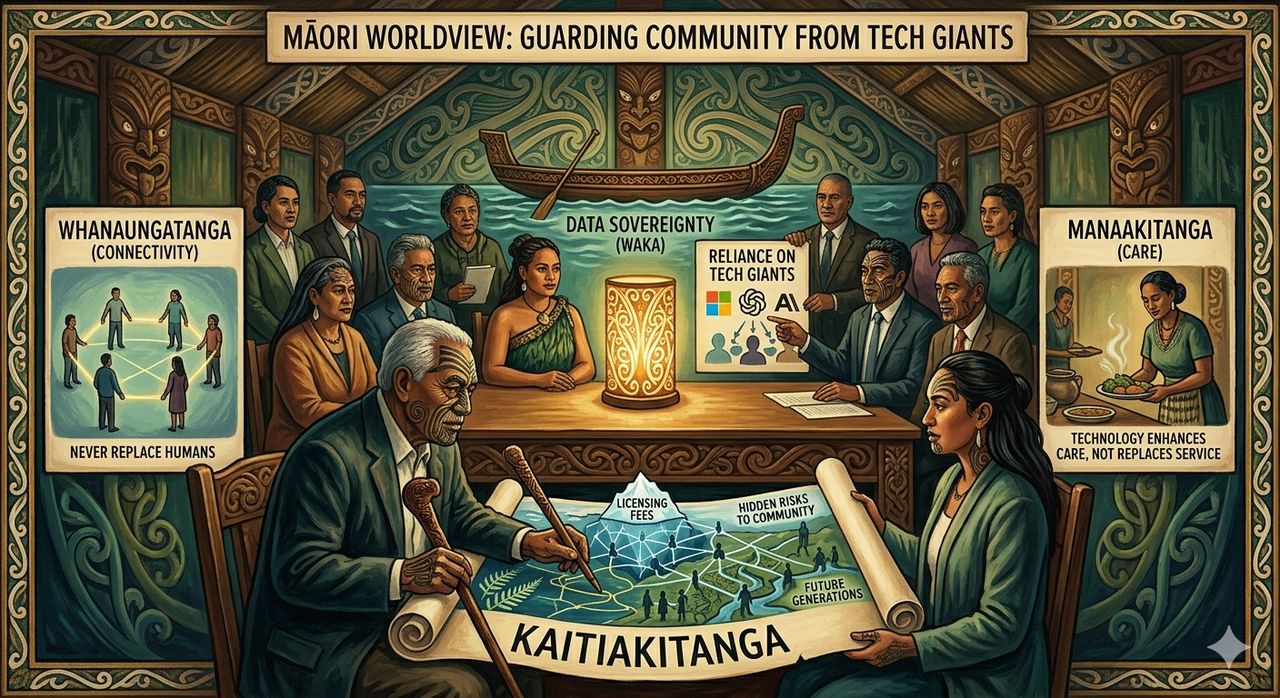
Figure 4: Māori worldview: Guarding community from Tech Giants
(Note. Image generated by Google, Gemini 3 Flash, 2026)
The Māori world also offers a fundamentally different starting point. The concept of Kaitiakitanga (Guardianship) reframes the leader’s role from maximising shareholder value to protecting the well-being of people, communities, and future generations. The leader guided by Kaitiakitanga does not ask “How do we automate fastest?” but “Who bears the cost of this transition, and what is our responsibility to them?”
Similarly, Whanaungatanga (Relationships and connectedness) emphasises that technology is necessary for optimising processes, but it cannot replace trust and team connectedness. Leaders adhering to this principle would never replace humans with AI because it would disrupt relationships and connectedness, the core values of the Maoriworldview.
Manaakitanga (Hospitality and Care) also clarified this point when business leaders questioned how to apply AI technology while still protecting and enhancing manaakitanga, preventing technology from replacing the crucial role of humans in serving, connecting with, and caring for the community.
What should we do?
So, is AI stealing our jobs? The answer is Yes, but only if we let it happen without a fight.Here is what I am asking you to do starting today.
First, sign the Open letter: A call to the NZ Parliament to regulate AI to the New Zealand government calling for an AI employment protection framework.
Second, raise the question at your next team meeting: does your organisation have a reskilling policy? If not, demand one.
Third, support Māori-led tech initiatives that are building AI tools rooted in community values, not extraction.
And the answer to the question in the title, "Is AI Stealing Our Jobs, or Are We Just Giving Them Up?", is perhaps somewhat clarified. AI isn't stealing jobs from humans; rather, humans are misusing AI as a tool to eliminate humanity itself. The future of work in Aotearoa is not yet written. But it will certainly be written by those who step up to shape it, knowing full well that their true worth goes far beyond a $15 subscription to an AI toolset.
Reference
Brunton, T. (2023, November 16). Tourism businesses committed to hospitality as AI, technology grow. RNZ. https://www.rnz.co.nz/news/business/502585/tourism-businesses-committed-to-hospitality-as-ai-technology-grow
Ethics and AI — A starter guide for educators. (2023). Ako Aotearoa. https://ako.ac.nz/programmes-and-services/collections/artificial-intelligence-ai-in-tertiary-education/practical-tips/ethics-and-ai-a-starter-guide-for-educators
Google. (2026). Gemini (Gemini 3.5 Flash) [AI image generator]. https://gemini.google.com/
Ministry of Business, Innovation & Employment. (2025). Principles from te ao Māori the Māori worldview | He aronga Māori ki ngā mātāpono. https://www.mbie.govt.nz/business-and-employment/economic-growth/previous-economic-development-work/just-transition/just-transitions-guide/foundations/principles-from-te-ao-maori-the-maori-worldview
Moir, J. (2026, May 19). Nearly 9000 public sector jobs to go, government agencies to merge, Nicola Willis announces. RNZ. https://www.rnz.co.nz/news/political/595655/nearly-9000-public-sector-jobs-to-go-government-agencies-to-merge-nicola-willis-announces
Radio New Zealand. (2026, April 19). As entry‑level jobs dry up in NZ, how can we help young people find their way into work? https://www.rnz.co.nz/news/on-the-inside/592838/as-entry-level-jobs-dry-up-in-nz-how-can-we-help-young-people-find-their-way-into-work
Regulate AI NZ. (2026). Home. https://regulateai.nz/
Stats NZ. (2025). Unemployment rate at 5.3 percent in the September 2025 quarter. https://www.stats.govt.nz/news/unemployment-rate-at-5-3-percent-in-the-september-2025-quarter/
Author: VO, HOAI NGUYEN

Bài viết nổi bật khác
- Hot nhất
- Mới nhất