Fossil Foraminifera in Vietnam: The Key to Unlocking Earth's History
Introduction Foraminifera fossils are single-celled organisms that live in aquatic environments and are distinguished by their characteristic...

Introduction
Foraminifera fossils are single-celled organisms that live in aquatic environments and are distinguished by their characteristic fossilized shells. They have existed for hundreds of millions of years and are among the most important pieces of evidence helping scientists understand climate change, ecological events, and Earth's geological history (Nguyễn & Trần, 2020). In Vietnam, these foraminifera fossils are found across various regions, providing researchers with valuable clues about ancient environments and the changes in marine ecosystems across different geological eras (Viện Sinh học, 2019).
What are Foraminifera?
Foraminifera are a group of single-celled organisms belonging to the phylum Foraminifera. These organisms have a unique feature: their shells, which are made of calcium or silica (Lê, 2021). The shape of their shells can vary depending on the species and their living environment. Foraminifera primarily inhabit shallow marine environments, although some species can also be found at greater depths. Because of their hard, fossilized shells, they are easily preserved after death and thus become a "key" to unlocking geological events in the past (Nguyễn & Trần, 2020).
Foraminifera Fossils and Earth's History
Foraminifera fossils help scientists determine the age of ancient sedimentary layers and identify climate changes over time (Vietnam Ministry of Natural Resources and Environment, 2019). They provide information about sea water temperature, salinity, ocean depth, and important events in Earth's history, such as ice ages and global climate shifts.
Foraminifera Fossils in Vietnam
Vietnam, located in Southeast Asia, has a rich system of sedimentary basins, providing a wealth of fossils, including foraminifera (Phan & Nguyễn, 2020). Regions such as the Red River Basin (Northern Vietnam), the Mekong Delta (Southern Vietnam), and other coastal areas of Vietnam are home to many foraminifera fossils. These fossils date from the Oligocene period (about 30 million years ago) to the Pleistocene period (about 2 million years ago) (Viện Sinh học, 2019).
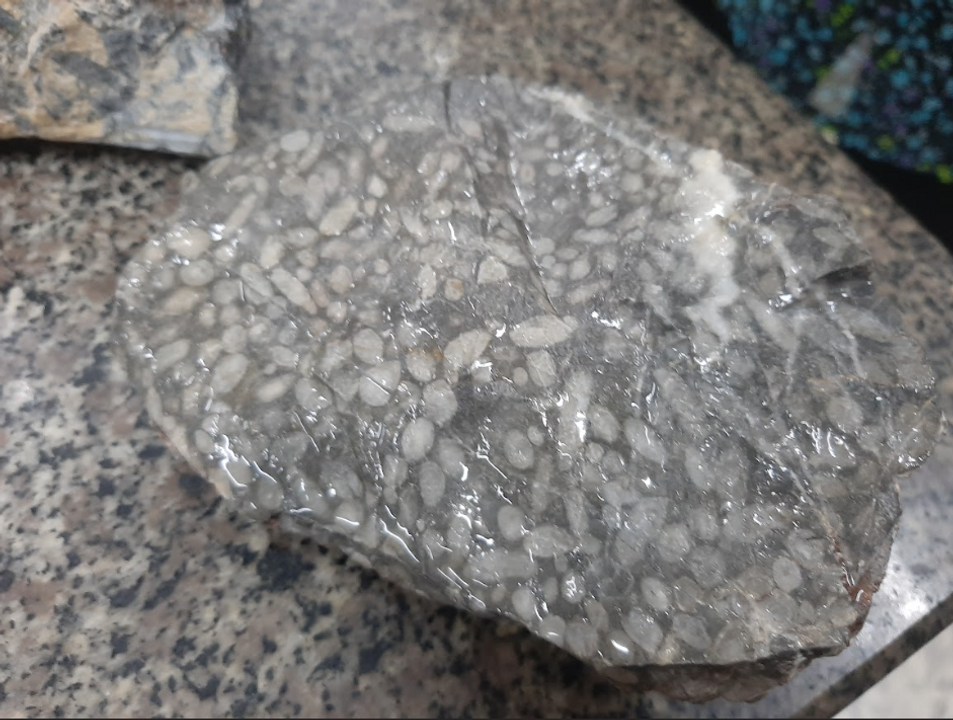
Foraminifera Fossil Sample from the Ha Tien Marine Area at the University of Science, Vietnam National University, Ho Chi Minh City, Vietnam
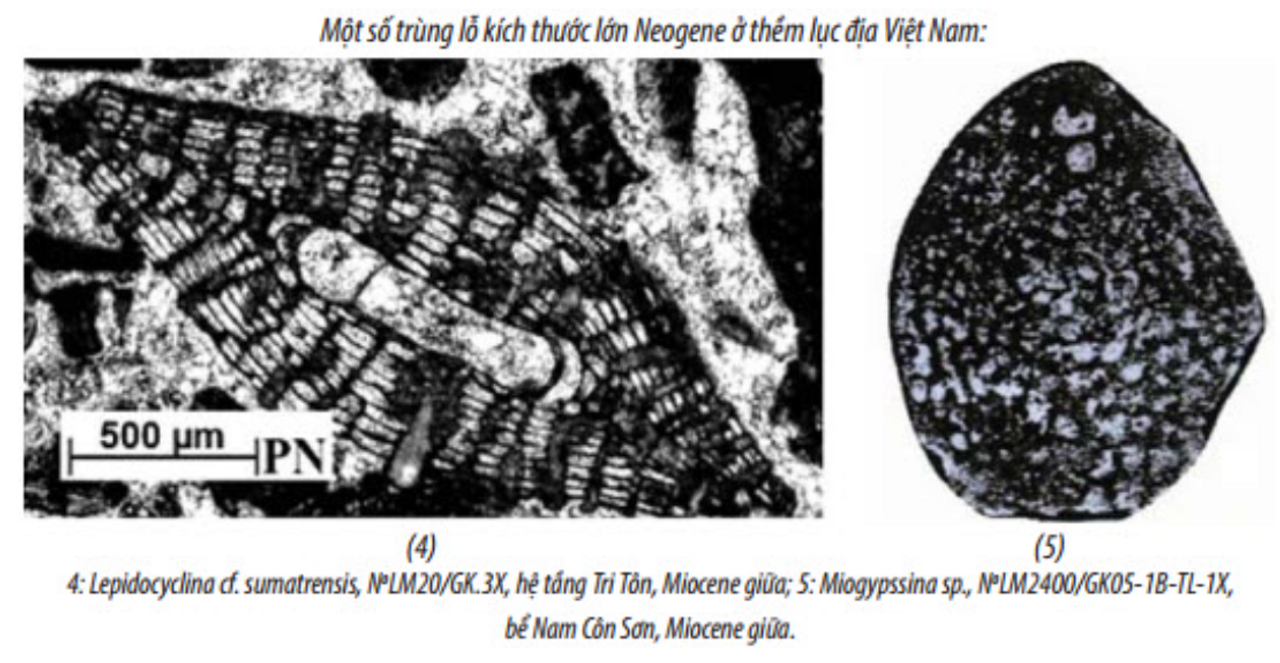
Some large-sized Neogene foraminifera on the continental shelf of Vietnam. Credit: PETROVIETNAM
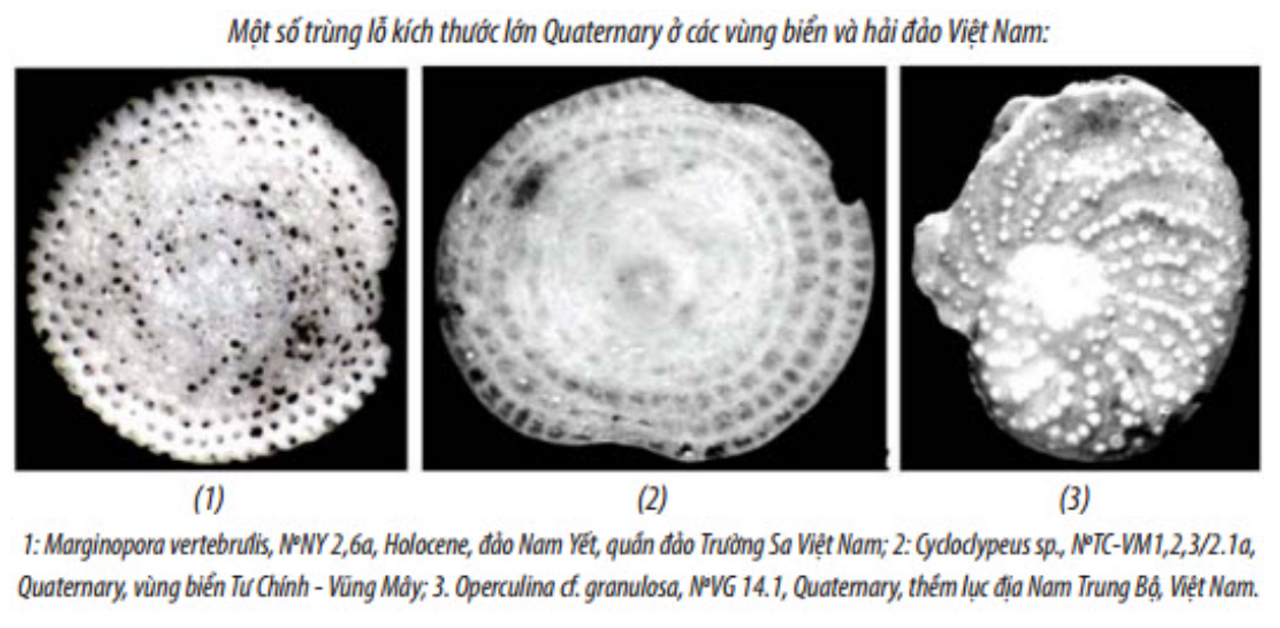
Some large-sized Quaternary foraminifera in the seas and islands of Vietnam. Credit: PETROVIETNAM
Key Research and Discoveries
In recent years, scientists have conducted extensive research on foraminifera fossils in Vietnam to reconstruct ancient environmental conditions (Lê, 2021). These studies have revealed significant environmental fluctuations in ancient marine environments, ranging from warm shallow seas to colder, deeper oceans.
Climate Change: By analyzing the distribution and characteristics of foraminifera species, researchers can identify various climate change events in Earth's history. For example, during the Miocene period (about 15 million years ago), Vietnam's marine environment was warm and shallow, while during the Pleistocene (about 2 million years ago), the marine environment became colder and deeper, reflecting global climate changes (Vietnam Ministry of Natural Resources and Environment, 2019).
Reconstructing Marine Ecosystems: Different species of foraminifera live at different ocean depths and in varying environmental conditions. The discovery of foraminifera species characteristic of shallow or deep oceans allows scientists to reconstruct marine ecosystems from ancient times (Phan & Nguyễn, 2020)
Importance of Studying Foraminifera Fossils
Studying foraminifera fossils is not only important for understanding Earth's history but also helps improve our ability to predict future environmental changes (Lê, 2021). By researching how foraminifera species responded to ancient climate shifts, scientists can derive valuable lessons about the impact of current climate change on marine ecosystems.
The Story Told by Fossils
Each foraminifera fossil tells a story of ancient times on Earth. These fossils help scientists understand past climates and environments, offering insights into the development of marine ecosystems and the evolution of living organisms. Studying these fossils is not only the work of geologists and biologists but also an important tool for forecasting the future of our planet (Nguyễn & Trần, 2020).
Conclusion
Foraminifera fossils in Vietnam are a valuable resource that helps scientists understand Earth's past and the climate changes that have occurred over millions of years. Research on these fossils not only serves scientific purposes but also provides important lessons in protecting the environment and addressing future climate change (Vietnam Ministry of Natural Resources and Environment, 2019).
References
Nguyễn, T. K., & Trần, M. H. (2020). Foraminifera Fossils and Paleoenvironmental Changes in Vietnam. Hanoi: Science and Technology Publishing House.
Lê, B. C. (2021). "The Importance of Foraminifera Fossils in Paleoclimate Studies." Journal of Biology and Geology, 34(2), 45-57.
Viện Sinh học. (2019). "Foraminifera and Biostratigraphy in the Red River Basin." Vietnam Journal of Marine Science, 12(4), 101-115.
Vietnam Ministry of Natural Resources and Environment. (2019). "Assessment of Climate Change through Marine Fossils in Vietnam." Climate Change Research Report, Hanoi.
Phan, T. T., & Nguyễn, M. T. (2020). "Foraminifera and their Role in the Stratigraphy of Southeast Asia." In Proceedings of the 12th Southeast Asia Geological Conference, 250-265. Southeast Asia Journal of Geology.

Phạm Thảo My
@lilyphan
Khoa học - Công nghệ
/khoa-hoc-cong-nghe
Bài viết nổi bật khác
- Hot nhất
- Mới nhất